


Cards, Universe & Everything
4.47.71K Reviews
App Specs
- Version
- 2.11.49
- Updated On
- License
- Free
- Downloads
- 1,000,000+
- Developer
- Avid Games
- Categories
- Strategy
- Platform
- Android
Screenshots
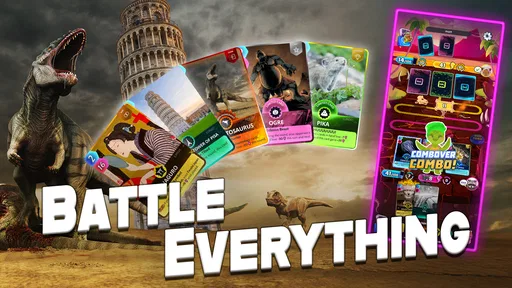

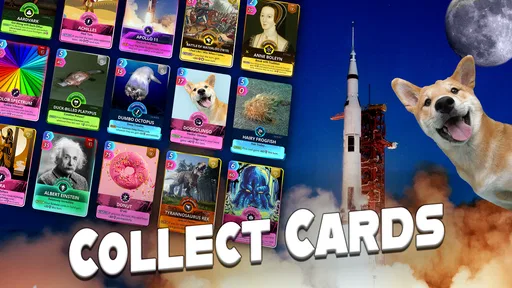

 Analysis by AppCompare
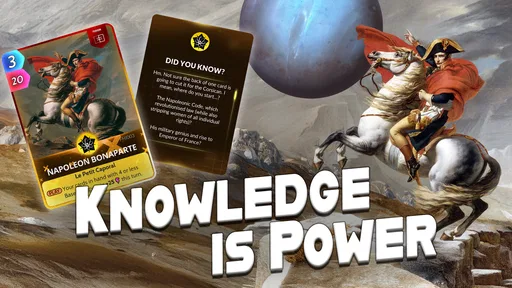
I approached Cards, Universe & Everything as a strategy game for people who enjoy trivia but want more than a simple question-and-answer session. Its central appeal is the way knowledge becomes part of a competitive card-game routine: you are not only trying to remember facts, but also deciding when your knowledge is useful, how much risk to accept, and how to build a better path through each match. That combination gives it a more active feel than a traditional trivia app.
The game comes from Avid Games and is free to install, with optional purchases ranging from $0.49 to $199.99 per item. It is rated for Everyone, runs on Android 7.0 and later, and its current version is 2.11.49. Those details make it broadly accessible, although the presence of large optional purchase tiers is worth keeping in mind if you prefer games with fewer monetization distractions.
How the game feels in everyday use
My first impression is that this is best understood as a knowledge-driven strategy game rather than a pure trivia test. The questions matter, of course, but the card format changes how I think while playing. A correct answer is valuable; choosing the right moment to use what I know is just as important. That extra layer gives the game a stronger reason to keep returning than a basic quiz where every round feels interchangeable.
The store summary describes trivia players becoming battle legends, but the practical experience is less about dramatic presentation and more about making small decisions under pressure. I found that useful because it gives general knowledge a purpose. Knowing a subject well can help, yet a confident player still has to think about timing and the overall shape of a match.
It is also a good fit for short sessions. I can imagine opening it during a commute, while waiting for an appointment, or after dinner when I want something more engaging than scrolling but do not want to commit to a long role-playing game. The structure supports that kind of stop-and-start use, although anyone who dislikes competitive pressure may find the battle framing less relaxing than a conventional quiz.
What makes the card format worthwhile
The card approach gives the trivia content a strategic aftertaste. Instead of treating every question as an isolated fact, I pay attention to how the result affects my next decision. That makes familiar subjects feel more interesting and gives weaker areas a practical consequence. I am not simply collecting correct answers in my head; I am trying to turn uneven knowledge into a workable plan.
One useful habit is to treat uncertainty as part of the strategy. When I know an answer, I can play confidently. When I am only partly sure, the important question becomes whether the possible reward justifies the risk. That is a more interesting decision than blindly guessing every time, and it is one of the reasons the game can appeal to strategy fans who normally avoid quiz apps.
Worth Reading Before You Choose

EA SPORTS FC Mobile 26 Is a Bigger Football Game, but It Takes Time

Flipboard Shows What News Apps Must Do Beyond the Feed

Switching to Android Auto Means Rethinking Your Driving Routine

Google Calendar Makes a Crowded Week Easier to Manage

Ludo King Makes the Most of the Minutes Between Plans

Baby Panda World Brings Quick Play to Modern Phones, but Its Game Library Feels Busy
Another tip is to notice which topics repeatedly expose gaps in your knowledge. Rather than seeing a missed question as a dead end, I would use it to identify categories worth revisiting. This creates a natural learning loop without turning the game into a formal study tool. It is especially useful for players who enjoy improving gradually and like seeing their decisions get sharper over time.
Speed expectations and the feel of a session
From a user perspective, the game is designed around quick decisions rather than long stretches of passive reading. That makes the perceived pace more important than raw visual spectacle. When the interface keeps the question, card choice, and result easy to follow, the match feels brisk because my attention stays on the decision instead of getting lost in menus.
I would not choose this game expecting the quiet rhythm of a crossword or the uninterrupted flow of a single-player puzzle. Its energy comes from responding, evaluating, and moving on. That can be refreshing when I want mental stimulation, but it can also feel demanding if I am tired or simply want to play without being tested.
A practical way to enjoy it is to begin with a small session rather than treating every opening as a commitment to a long play period. That helps me judge whether my concentration is in the right place. Trivia games can feel much harder when I am distracted, and the strategic layer means that a careless answer may affect more than one moment.
When heavier play becomes demanding
The most demanding moments are not necessarily the ones with the most complicated controls. They are the stretches where several decisions arrive close together and I must balance confidence, timing, and the possibility of a bad guess. That is where the game separates itself from a casual quiz. Players who enjoy thinking while under pressure will probably find those moments satisfying; players looking for a completely effortless pastime may not.
Longer play sessions can also make the repeated knowledge-checking feel more noticeable. Even a strong format benefits from breaks, especially when I start answering automatically instead of considering the situation. My best results come when I pause briefly between sessions and return with a clear head. That is not a flaw unique to this game, but the competitive structure makes fatigue easier to feel.
For families, the Everyone rating is reassuring in terms of the intended age audience, but I would still pay attention to how younger players handle optional purchases. The game is accessible to a broad audience, yet free-to-play design can encourage curiosity around paid items. A parent who wants a tightly controlled, purchase-free experience should review the device’s purchase settings before handing it over.
Reliability and recovering from interruptions
Reliability matters more in a game built around battles than in a disposable quiz. If I am interrupted halfway through a question or decision, the experience is more frustrating because the result can feel connected to timing. My preferred way to use it is in situations where I can give the match a few uninterrupted minutes, rather than opening it while juggling several other tasks.
The current version is 2.11.49, which indicates that the game is maintained through ongoing version changes. I would still keep the app updated when possible, particularly on an older device, because current builds are generally the sensible starting point when judging stability. I would not assume that every phone will behave identically, though; Android performance can vary significantly with available storage, memory, and background activity.
Recovery is another reason not to play carelessly while multitasking. If an interruption occurs, I would reopen the game and check where the session returns before making another move. That simple pause can prevent me from tapping through a result or assuming that a previous action did not register. It is a small workflow, but it is useful for any competitive mobile game where an accidental second tap can matter.
I also recommend avoiding rapid repeated taps when the interface is changing from one decision to the next. Even without claiming a specific technical problem, deliberate input is safer than frantic input. It gives me a clearer sense of whether the game has accepted the action and reduces the chance of making a choice I did not intend to make.
Device constraints and resource expectations
The minimum operating-system requirement is Android 7.0, so the game is not restricted to only recent Android phones. That broad compatibility is helpful for players using an older handset, but an operating-system requirement alone does not guarantee the same experience on every device. A phone with limited free space or many background apps may feel less comfortable than a newer model, especially during longer sessions.
I would prepare an older device by closing unnecessary apps, keeping some storage available, and avoiding play when the phone is already warm or struggling with other tasks. These are ordinary precautions rather than claims about a specific hardware requirement. They simply give a strategy game a better chance to feel responsive on modest equipment.
Resource demands are also about attention, not only battery or memory. The game asks me to read, recall, and decide, so playing while walking, commuting through a crowded area, or switching constantly between apps can reduce the quality of the experience. For a quick round, that may be fine. For serious progress, I would choose a calmer setting.
iPhone users should consider the same practical question from a different angle: do they want a trivia game that is also competitive and card-focused? The appeal is not merely that it works on a mobile screen. The important issue is whether the player enjoys turning knowledge into choices. Someone who wants a simple offline-style quiz routine may be happier with a more traditional alternative, while someone who likes collection and tactical pressure may find this format more rewarding.
Who will enjoy it most
I would recommend it to players who like general knowledge, competitive matches, and games that reward gradual improvement. It is particularly suitable for someone who finds ordinary trivia too flat but does not want the complexity of a full strategy title with extensive resource management. The card structure adds enough decision-making to make familiar questions feel purposeful without requiring the player to learn a large rulebook first.
It can also work well as a social conversation starter. A missed question may lead to a quick discussion, and a surprising answer can become more memorable because it was connected to a match. I can see friends comparing their strongest subjects, challenging one another, and using the game as a light competitive activity rather than treating it as a serious test of intelligence.
The game is less suitable for people who dislike uncertainty or who want complete control over outcomes. Knowledge helps, but it cannot remove the discomfort of encountering a subject outside your experience. It is also not my first choice for someone seeking a calm, purely educational app, a deep tactical simulator, or a game with no temptation to spend money.
Free access and the purchase question
Because the game is free to install, it is easy to try without making an immediate financial commitment. That is a real advantage: I can decide whether the trivia-and-cards combination suits me before considering anything optional. The important discipline is to treat purchases as convenience or support rather than as a requirement for enjoying the basic concept.
The available purchase range is wide, from $0.49 to $199.99 per item. That does not mean every player will spend that amount, but it does mean I would approach the store carefully. Anyone who prefers a predictable entertainment budget should set a limit before playing and use device-level purchase controls where appropriate. The game’s free entry is appealing, yet the optional economy may be a reason for some readers to skip it.
My advice is to play long enough to understand whether the strategic loop itself is enjoyable. If I only feel motivated when a purchase appears to speed things up or improve my position, that is a sign the game may not match my preferred style. If I enjoy the questions and decisions without spending, the free version has already done its job.
How it compares with ordinary trivia games
Compared with a standard quiz app, this game gives each answer more context. A conventional alternative may be better when I want a quick sequence of questions, a relaxed learning session, or a straightforward way to practice facts. Cards, Universe & Everything is more appealing when I want the answer to influence a competitive plan.
Compared with a conventional strategy game, it is lighter and more approachable. I do not need to learn a complicated battlefield system to appreciate what is happening; the knowledge component is immediately understandable. The trade-off is that players looking for rich long-term planning, detailed unit control, or a large strategic sandbox may find the trivia foundation limiting.
That middle position is the game’s strongest identity. It is not simply a quiz with decorative cards, and it is not a full strategy epic that happens to contain questions. Its value comes from the tension between the two. If that balance sounds appealing, it offers a distinct alternative. If either side sounds unnecessary to you, a more focused app will probably be the better choice.
My performance verdict
After considering the pace, interruptions, device range, and free-to-play structure, I see this as a well-targeted mobile strategy game rather than an all-purpose trivia replacement. The 4.4 average from around 53 thousand ratings and more than a million installs suggest that the concept has found a substantial audience, while roughly 7.7 thousand written reviews show that many players have taken the time to discuss their experience. Those figures are useful context, but my recommendation still depends on whether you enjoy competitive knowledge games.
For my everyday use, the best scenario is a short, focused session when I want to wake up my brain without opening a complex game. I would avoid starting a match when I am distracted, low on battery, or likely to be interrupted. On an older phone, I would keep background activity low and storage reasonably clear. Those habits do not transform the game, but they make its decision-driven format easier to enjoy.
The key trade-off is simple: you gain more strategy than a normal quiz, but you also accept more pressure and more attention to purchases. That makes it a good recommendation for trivia fans who want their knowledge to affect a battle, and a weaker recommendation for anyone seeking a quiet, uncomplicated, or strictly purchase-free experience.
Overall, I would suggest giving Cards, Universe & Everything a try if you like learning through competition and enjoy improving by recognizing your weak categories. Avid Games has chosen a distinctive middle ground, and the game is most convincing when it lets a correct answer become a meaningful decision rather than just another point. Just approach the optional purchases carefully, play on a device that is not already overloaded, and remember that its strongest moments come from thoughtful choices—not from rushing through every question.
Pros
- Creative card-based gameplay with a strong science and nature theme.
- Combines learning and strategy without feeling like a traditional quiz.
- Large variety of cards encourages experimentation and replayability.
- Accessible rules make it easy for casual players to start quickly.
- Distinctive artwork gives the game a polished
- educational atmosphere.
Cons
- Some card interactions may take time to understand for new players.
- The educational focus may not appeal to players seeking fast-paced action.
- Random card draws can occasionally make matches feel unbalanced.
- Replay value may decrease after players become familiar with the card pool.
- Requires attention to detailed descriptions and effects during longer games.
FAQs for Cards, Universe & Everything
What is Cards, Universe & Everything?
Cards, Universe & Everything is a collectible card game built around real-world history, science, nature, mythology, and culture. Each card represents a topic with different statistics, and players use those values in strategic battles. The game combines educational information with competitive deck building, making it suitable for players who enjoy learning new facts while collecting and upgrading cards.
How does the gameplay work?
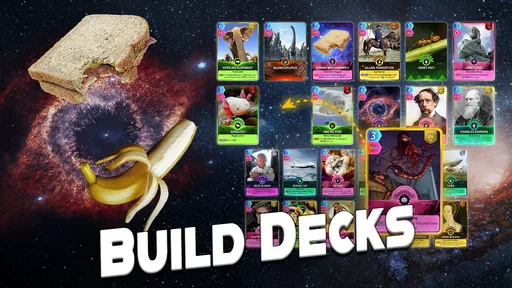
Matches are based on choosing cards and comparing their statistics against an opponent’s cards. Building a balanced deck is important because different categories and abilities can affect the result of a round. From my experience, the game is easy to understand at the beginning, but winning consistently requires learning card strengths, planning combinations, and adapting your strategy to different opponents and game modes.
Is Cards, Universe & Everything free to download and play?
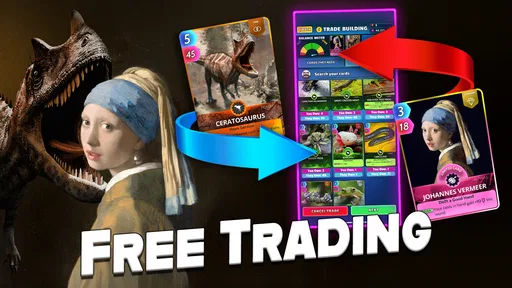
The game is generally free to download, allowing players to begin collecting cards and participating in matches without paying upfront. However, it may include optional in-app purchases for card packs, resources, or progression-related items. You can play without spending money, although progress and collection growth may feel slower compared with users who choose to purchase additional content.
Does the game require an internet connection?
Cards, Universe & Everything is primarily designed as an online game, so an internet connection is normally required for matches, account features, events, and synchronization of your collection. A stable connection is recommended to avoid interruptions during battles. Some informational card content may be accessible in limited situations, but the main competitive experience should not be expected to work fully offline.
Is Cards, Universe & Everything suitable for children and casual players?
The game is approachable for casual players because its basic card-comparison mechanics are simple to learn, while the large variety of subjects can appeal to curious players and families. Nevertheless, parents should review the game’s age rating, chat or social features, advertising, and in-app purchase settings before allowing younger children to play. Competitive progression may also encourage frequent play.


